
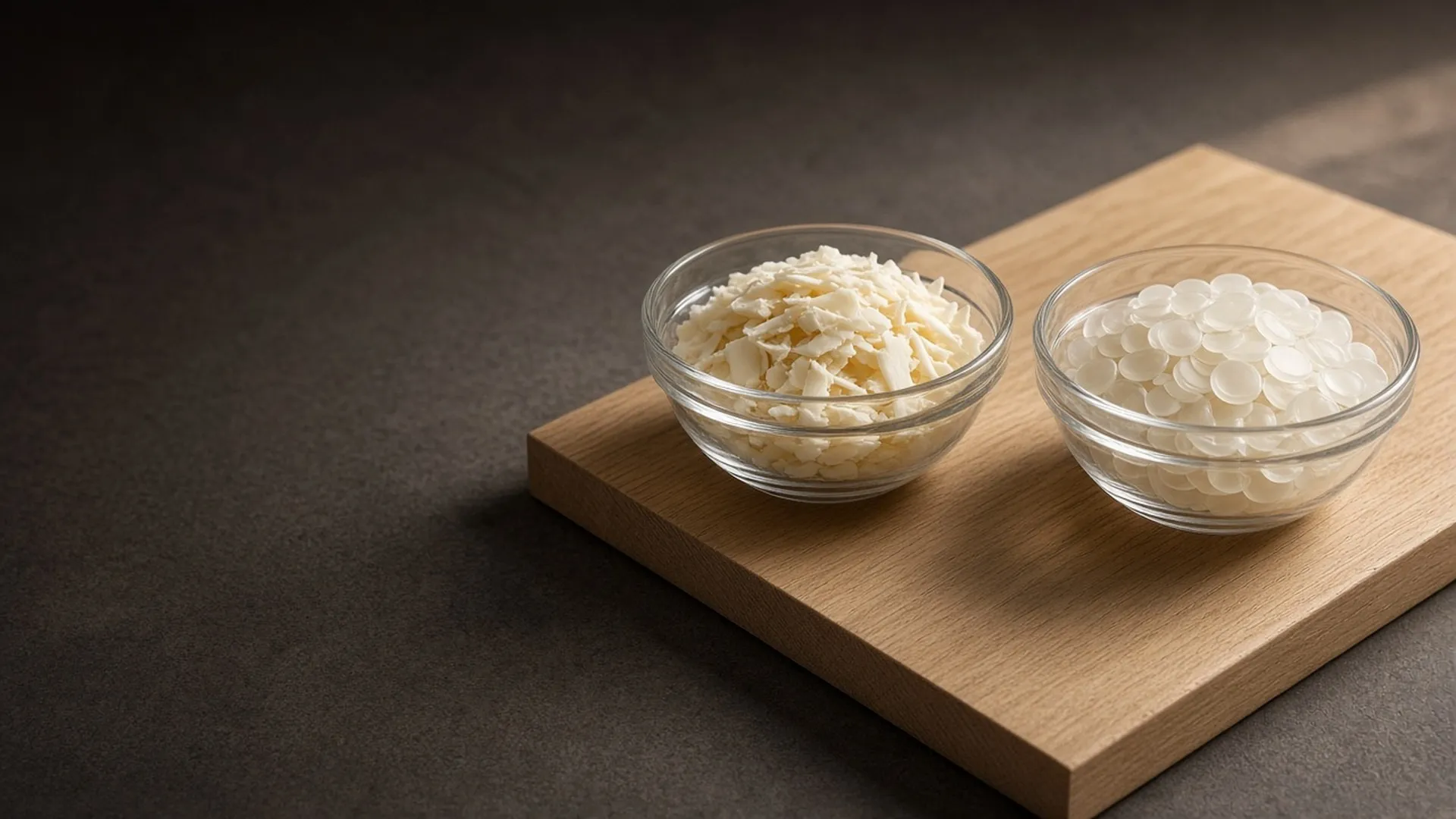
Soy wax vs paraffin
Where each comes from, and what the NCA says about both.
Disclosure: We may earn a commission if you buy through links on this page. It does not change our guidance. Affiliate Disclosure
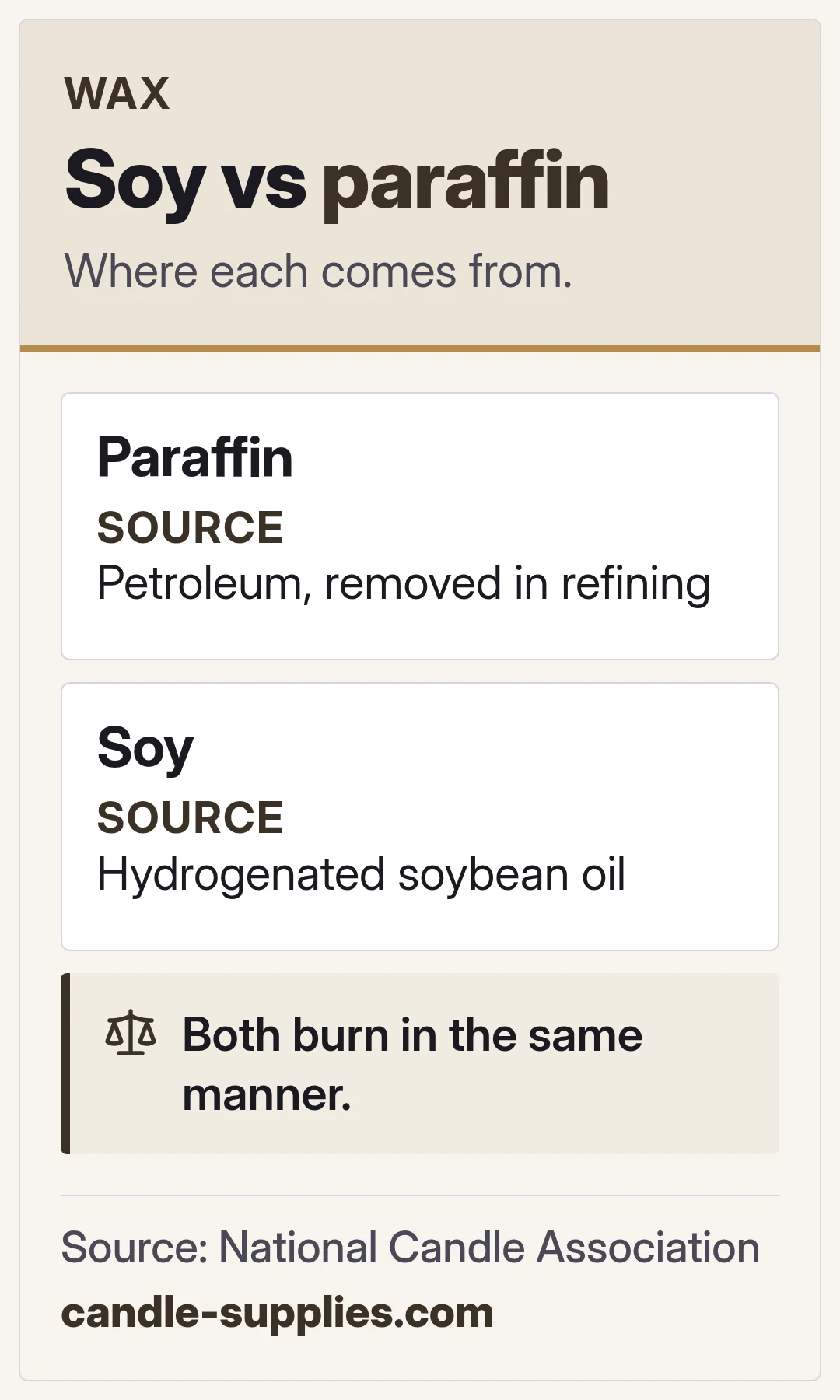
Paraffin
The NCA says paraffin wax was developed after chemists found a way to remove the waxy substance in petroleum during refining. It became the standard candle wax in the Western Hemisphere.
Soy
The NCA says soy wax was developed for the candle market in the late 1990s by hydrogenating soybean oil.
How they burn
The NCA says all candle waxes are primarily hydrocarbons and burn in the same manner. It says no wax or blend is considered best for candlemaking.
What causes soot
The NCA says no wax is soot-free, and that sooting is mainly a factor of wick length and flame disturbance, not the wax type.
FAQ
General information only. Never leave a burning candle unattended, and keep it at least 12 inches from anything that can burn. When you heat wax, stay with it, and turn off the heat if you leave or see smoke. Never use water on a wax fire. If you can do so safely, slide a lid over the pot and turn off the heat; if the fire does not go out, get everyone out and call 911 from outside. Read and follow the Safety Data Sheet and instructions from the maker of every wax, wick, fragrance oil, and dye you use.
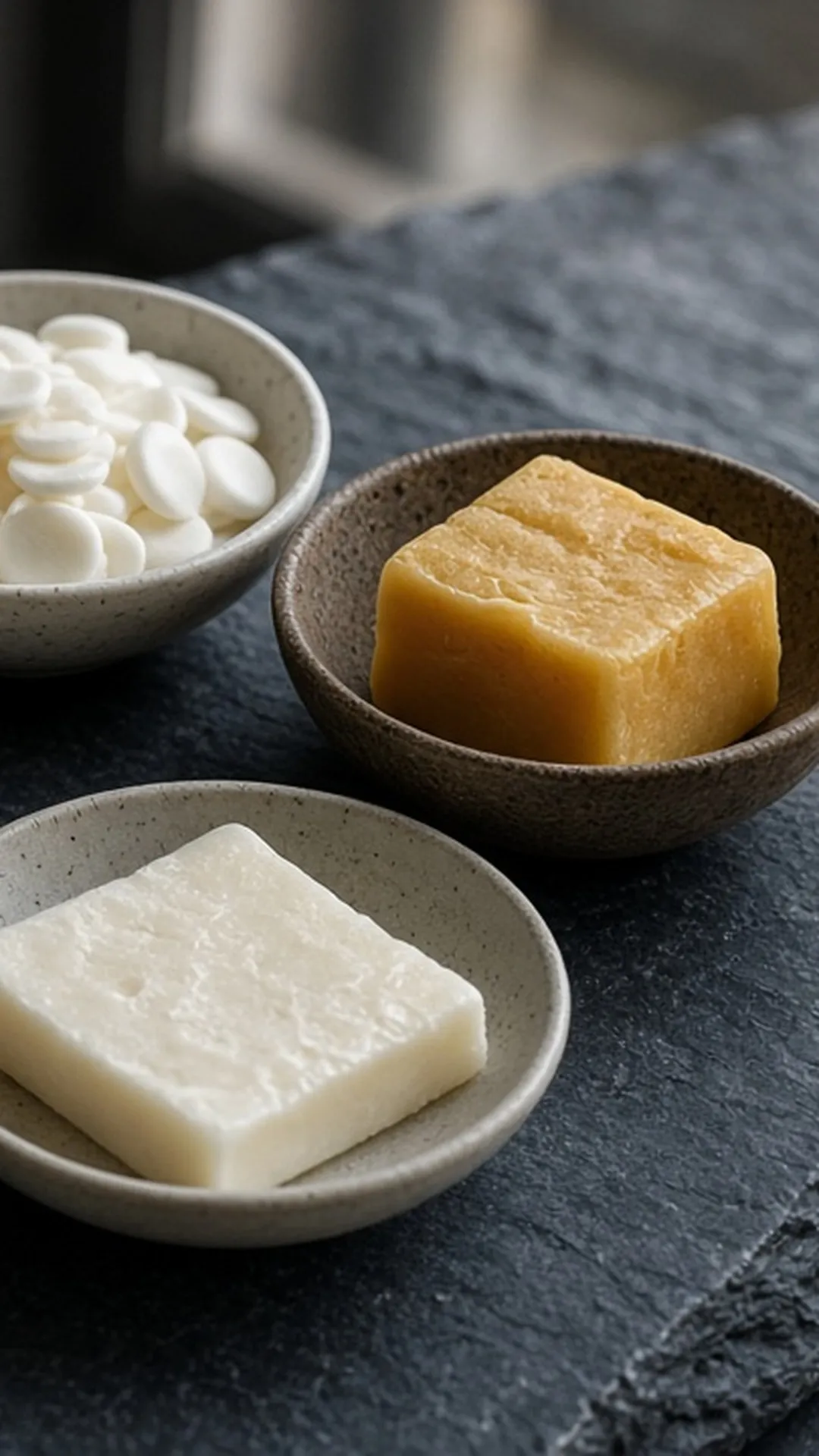


Next: types of wax
Paraffin, soy, beeswax, blends.
