
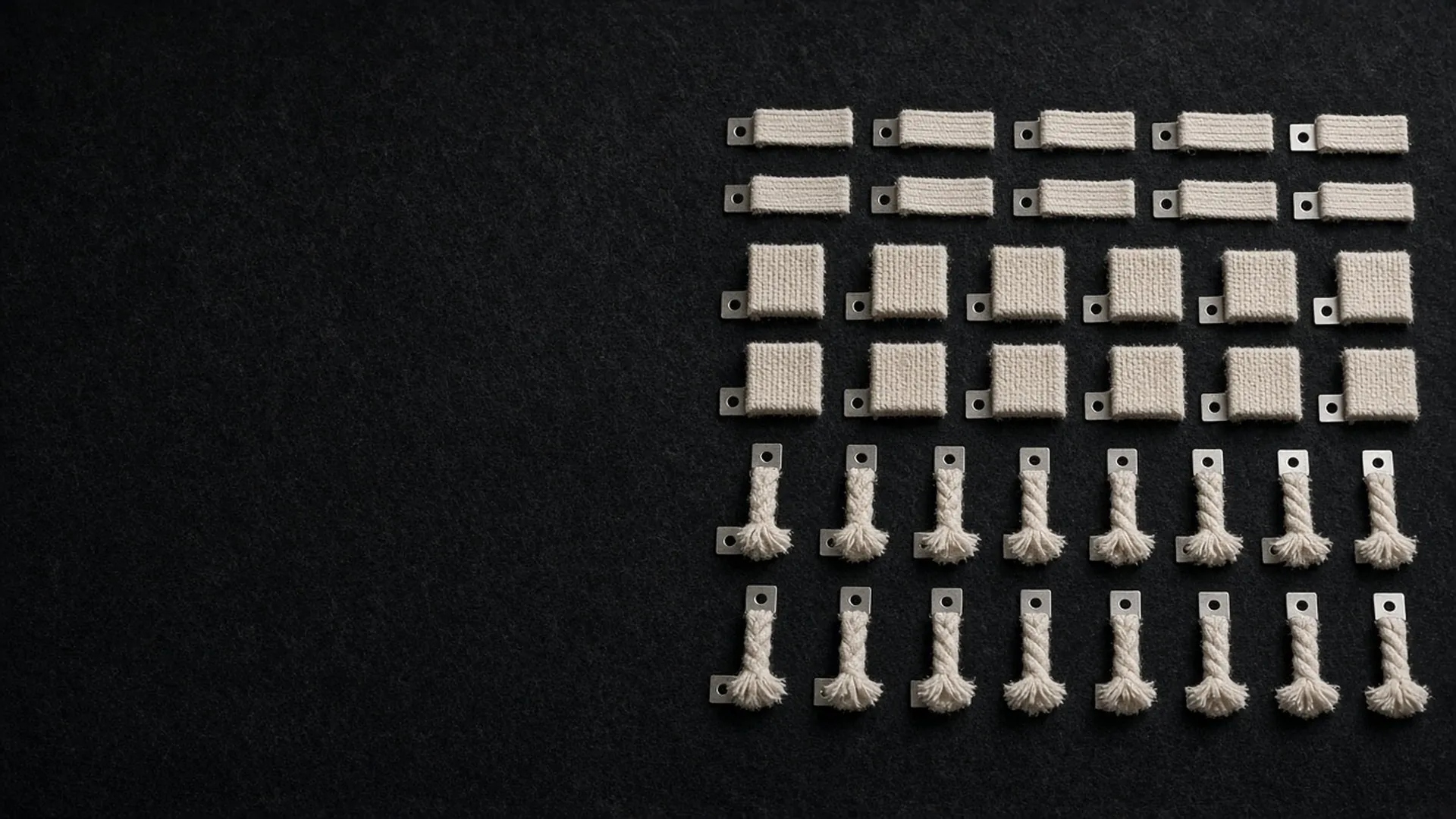
Candle wick types and sizes
Flat, square, cored, wooden, and why size matters.
Disclosure: We may earn a commission if you buy through links on this page. It does not change our guidance. Affiliate Disclosure
What a wick does
The NCA says a wick delivers fuel to the flame. Acting like a fuel pump, it draws melted wax up into the flame to burn.
Why size matters
The NCA says different wick sizes draw different amounts of fuel. Too much fuel and the flame flares and soots. Too little and it sputters out.
The main types
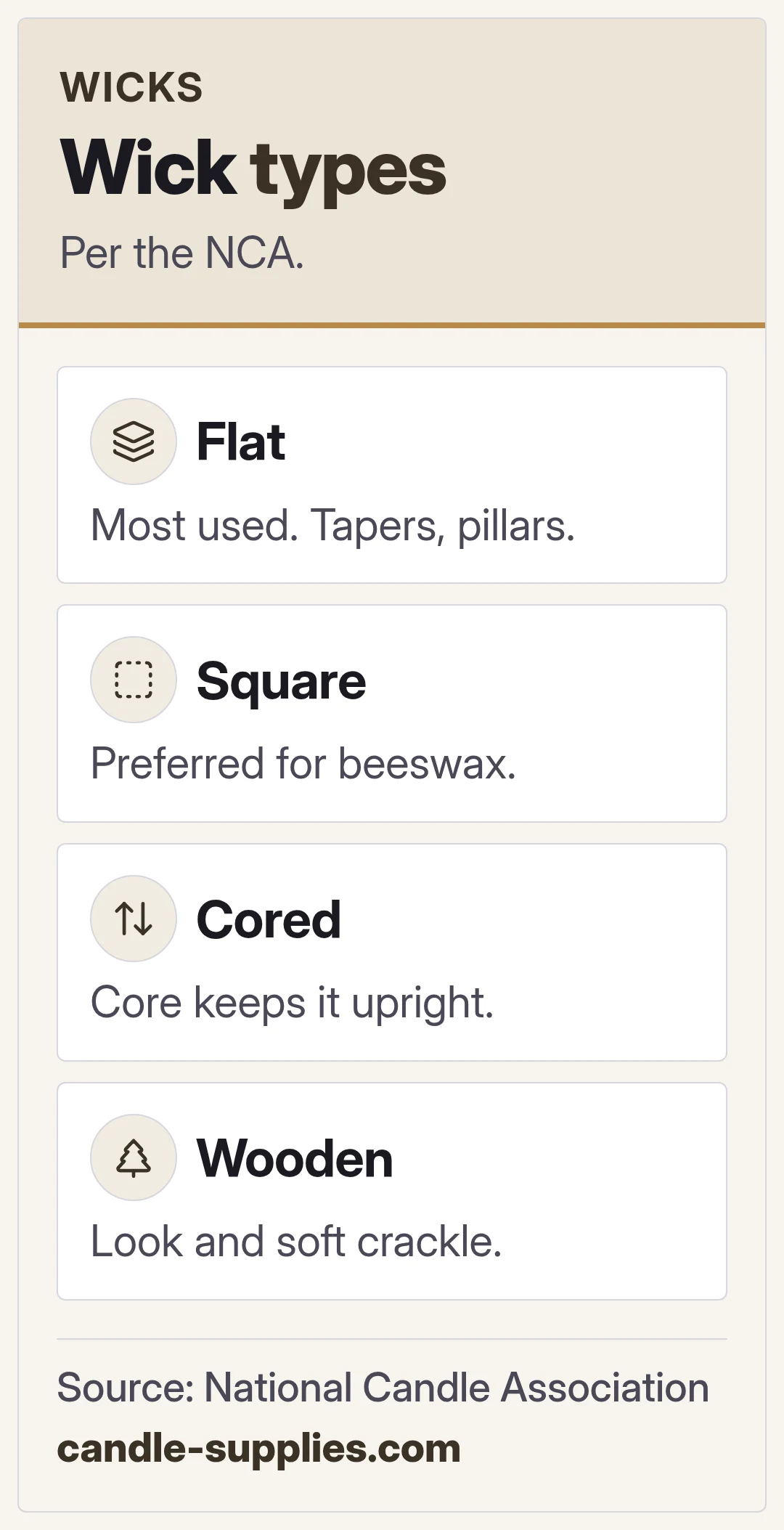
The NCA lists flat wicks, square wicks, cored wicks, wooden wicks, and specialty wicks. It says flat wicks are the most commonly used.
What affects wick choice
The NCA says the wax type and the candle's size, shape, color, and fragrance all affect wick choice.
The federal lead rule
The CPSC says metal-cored wicks, and candles that use them, must not contain more than 0.06% lead by weight in the metal core, for products made or imported on or after October 15, 2003.
FAQ
General information only. Never leave a burning candle unattended, and keep it at least 12 inches from anything that can burn. When you heat wax, stay with it, and turn off the heat if you leave or see smoke. Never use water on a wax fire. If you can do so safely, slide a lid over the pot and turn off the heat; if the fire does not go out, get everyone out and call 911 from outside. Read and follow the Safety Data Sheet and instructions from the maker of every wax, wick, fragrance oil, and dye you use.
Next: wooden wicks
The look and the crackle.
