

Candle soot, explained
Where the black smoke comes from, per the NCA.
Disclosure: We may earn a commission if you buy through links on this page. It does not change our guidance. Affiliate Disclosure
How a candle burns
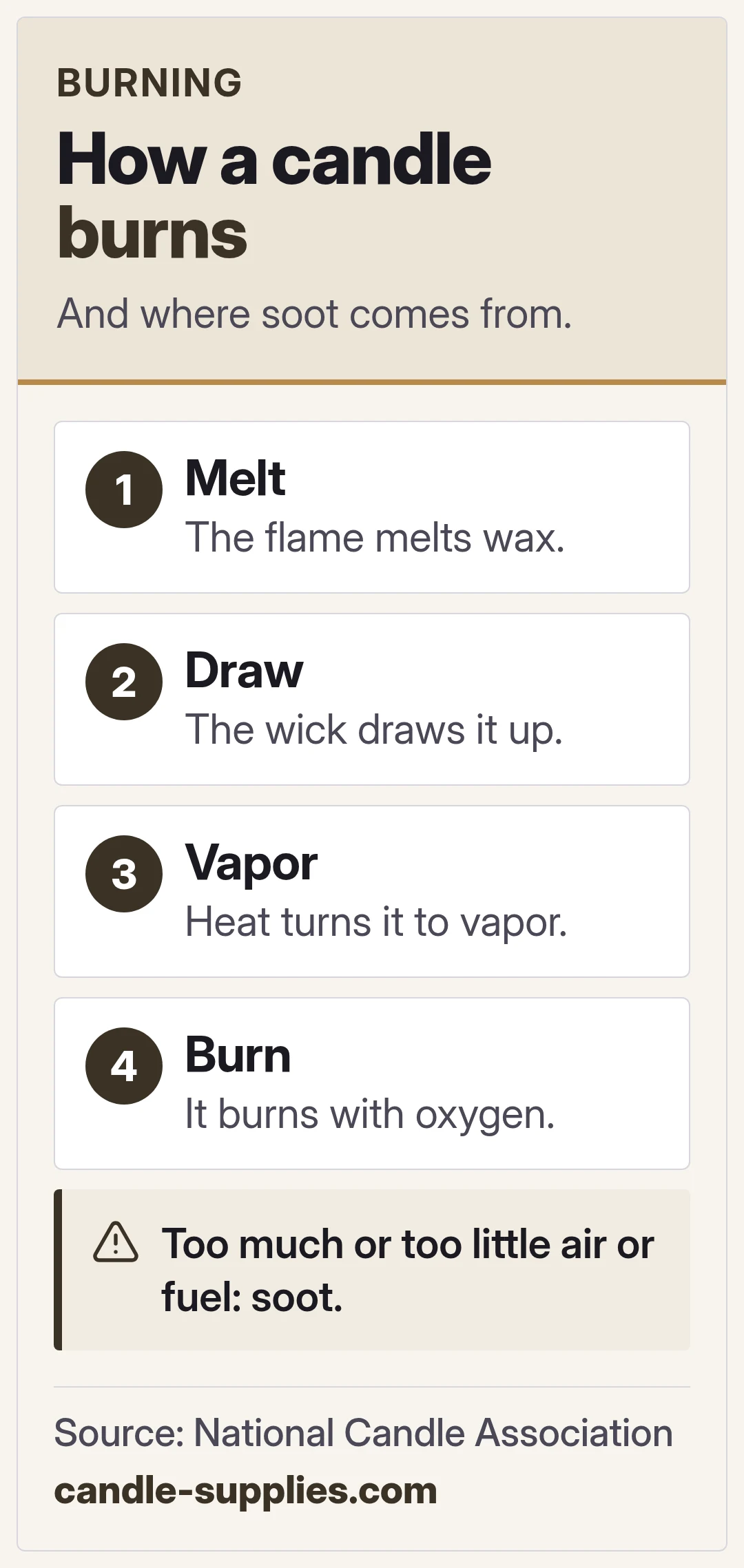
The NCA says the flame melts wax near the wick, the wick draws it up, and the heat turns it to vapor. The vapor burns with oxygen to make heat, light, water vapor, and carbon dioxide.
Where soot comes from
The NCA says when a flame gets too little or too much air or fuel, unburned carbon particles (soot) escape.
Wick length and drafts
The NCA says sooting is mainly a factor of wick length and flame disturbance. It says to trim the wick to 1/4 inch before each use and keep candles away from drafts and vents.
No wax is soot-free
The NCA says all organic compounds give off some soot when burned.
FAQ
General information only. Never leave a burning candle unattended, and keep it at least 12 inches from anything that can burn. When you heat wax, stay with it, and turn off the heat if you leave or see smoke. Never use water on a wax fire. If you can do so safely, slide a lid over the pot and turn off the heat; if the fire does not go out, get everyone out and call 911 from outside. Read and follow the Safety Data Sheet and instructions from the maker of every wax, wick, fragrance oil, and dye you use.


Next: wick types
Flat, square, cored, wooden.
